


Carbon Fiber Solutions for Rail Rolling Stock: Lighter Trains, Longer Service Life
- 2026-09-21
A rail vehicle carries its own weight down the line before it carries a single passenger. Bogies, car body shells, doors, gangways and interior modules all sit on an axle load budget that the track sets and the operator cannot negotiate. Every kilogram saved above the suspension can be converted into payload, into a lower track access charge, or into energy that never has to be regenerated. This solution guide is written for rolling stock engineers and procurement teams who already know why mass matters, and who need to know which composite problems the industry keeps running into, which product forms answer them, and what has to be right for a part to pass a rail qualification.
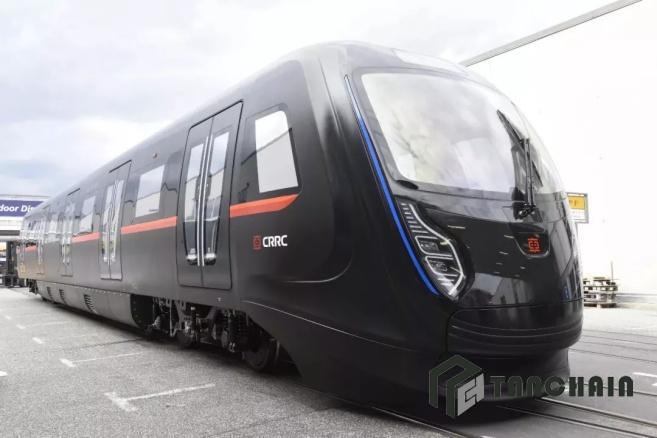
We work through the engineering problems that drive composite adoption in rolling stock, map each one to the carbon fiber, aramid and pre-oxidized fiber product forms that solve it, give the measured reasons behind each benefit, and finish with the selection and implementation rules that decide whether a programme stays on schedule. The final section covers what Tanchain can supply for a rail programme and how to specify it.
What This Guide Covers
Five problems that push rolling stock toward composites
1.1 — The axle load budget is fixed before the design starts
1.2 — Unsprung and suspended mass behave very differently
1.3 — Corrosion and fatigue set the maintenance interval
1.4 — Fire, smoke and toxicity are not optional in a tunnel
1.5 — Interior modules are replaced long before the car body
From problem to product: the mapping
2.1 — Car body and interior panels
2.2 — Doors, door leaves and door pockets
2.3 — Bogie and underframe components
2.4 — Roof equipment supports and cable containment
2.5 — Gangways, bellows frames and end structures
2.6 — Thermal and fire barriers
Why the properties hold up in a rail environment
3.1 — Specific stiffness against a mass budget
3.2 — Fatigue without a crack path
3.3 — Corrosion, de-icing salts and wash chemicals
3.4 — Fire performance and the material stack behind it
3.5 — Dimensional stability over a full temperature cycle
Selection matrix: requirement to product form
Implementation details that decide the outcome
5.1 — Ply orientation is a drawing dimension
5.2 — Metal-to-carbon interfaces and galvanic isolation
5.3 — Bolted and bonded joints in a vibrating frame
5.4 — Manufacturing route: pultrusion, press, infusion, RTM
5.5 — Repair strategy and the depot
Supporting materials: aramid and pre-oxidized fiber in the same vehicle
Why Tanchain for rolling stock composite programmes
1. Five Problems That Push Rolling Stock Toward Composites
Composite adoption in rail is rarely driven by a single requirement. It is driven by several requirements that arrive at the same time and cannot all be satisfied by steel or aluminium. These five show up again and again in real programmes.
1.1 — The Axle Load Budget Is Fixed Before the Design Starts
Track infrastructure, bridges and signalling all impose axle load limits that a new vehicle has to respect. The limit is set on day one and it does not move. Within it, the designer has to fit structure, traction equipment, HVAC, interiors and passengers. Since the passengers are the revenue, mass removed from the vehicle itself is the only variable genuinely under control.
This is why the conversation in a rolling stock programme is usually about tare weight and not about strength. A material that is strong enough but heavy consumes budget that the operator would rather spend on seats.
1.2 — Unsprung and Suspended Mass Behave Very Differently
Mass above the primary suspension affects acceleration energy and axle load. Mass below it — in the bogie, the wheelset and the brake equipment — affects track forces, ride quality and wear in a much more direct way. Reducing unsprung mass improves wheel-rail interaction, while reducing suspended mass improves energy consumption and allows a higher payload. The two budgets should be tracked separately, because the payoff is not the same.
1.3 — Corrosion and Fatigue Set the Maintenance Interval
A rail vehicle lives outdoors for thirty years or more. It sees rain, de-icing salt, brake dust, wash chemicals and repeated loading cycles in the millions. Steel corrodes, aluminium fatigues around welds, and both require inspection regimes that keep vehicles out of service. A material system that removes a corrosion mechanism or slows a fatigue mechanism changes the maintenance economics of the whole fleet.
1.4 — Fire, Smoke and Toxicity Are Not Optional in a Tunnel
A fire in a tunnel or an underground station is the governing design case for interior materials in most networks. Materials are specified against reaction-to-fire performance, smoke density and toxicity limits, and the certification path is specific to the operator and the national authority. A composite that performs mechanically but fails the fire case will not be fitted, regardless of its weight saving.
1.5 — Interior Modules Are Replaced Long Before the Car Body
Refurbishment cycles are shorter than vehicle life. Interior panels, seats, luggage racks, ceiling modules and partitions are replaced or reconfigured while the car body continues in service. Components that are light, easy to handle during a depot visit and tolerant of repeated removal and refitting reduce the cost of every refurbishment.
2. From Problem to Product: The Mapping
Each of those five problems lands on a different part of the vehicle, and each part has a product form that answers it best. This section maps them one by one.
2.1 — Car Body and Interior Panels
Interior side walls, ceiling panels, partition walls and luggage rack structures are the highest-volume composite opportunity on a train. They are large, lightly loaded, and currently made in aluminium or steel with painted or laminated finishes.
The route here is a sandwich panel: carbon fiber fabric or multiaxial non-crimp fabric skins over a lightweight core, cured by press or resin infusion. Sandwich construction delivers the bending stiffness a large flat panel needs without solid laminate thickness, and the finished panel can carry a decorative film or a gel coat directly. For a given panel stiffness, a carbon fiber sandwich is significantly lighter than an aluminium sheet and stiffener assembly, and it eliminates the corrosion that shows up along the lower edge of interior panels after years of cleaning cycles.
Where a panel is a flat plate machined to shape rather than a sandwich, carbon fiber plate is the practical form: it machines like a filled composite, holds tight tolerances, and is well suited to brackets, mounting plates and small structural panels produced in quantity.
2.2 — Doors, Door Leaves and Door Pockets
Door leaves are one of the best composite cases on any vehicle because the load path is well understood and the part is replaced periodically. A door leaf has to be stiff enough not to rattle or deflect, light enough to move quickly under a small actuator, and robust against slamming and vandalism.
A carbon fiber sandwich leaf with aramid fabric plies on the impact face gives the stiffness and the local impact tolerance together. The aramid layer does not stop a determined attack, but it prevents the fibre breakout and hole growth that turns a small dent into a rejected part. The door pocket, where the leaf slides, benefits from the same stiffness-to-mass ratio because the guide track loads scale with leaf mass.
2.3 — Bogie and Underframe Components
Bogie frames, equipment mounting brackets, sand boxes, brake caliper supports and antenna brackets are candidates once the vehicle manufacturer is confident in the fatigue and impact behaviour. Composite bogie frames have been demonstrated in service and are generally designed as adhesively bonded or co-cured assemblies rather than welded ones, because welding is not available.
The engineering care here is in the joints. A carbon fiber bogie component has to accept the same attachment points as the steel one it replaces, which usually means metallic inserts, bonded bushes or bolted lugs designed with adequate bearing area. Underframe equipment boxes benefit in a more straightforward way: a carbon fiber box with aramid-fabric inner skin is lighter, does not corrode, and can be shaped aerodynamically without the tooling cost of a metal pressing.
2.4 — Roof Equipment Supports and Cable Containment
Air conditioning units, pantograph components and roof-mounted electrical equipment sit on supports that add mass at the worst possible height for stability. Roof structures and their supports are therefore an attractive area for mass reduction.
Pultruded carbon fiber profiles are well suited here. They are produced in continuous lengths with a constant section, which matches the geometry of roof rails and equipment supports, they resist the standing water and organic growth that collect on a roof, and they are electrically non-conductive, which simplifies separation from the traction supply. Cable troughs and containment channels follow the same logic.
2.5 — Gangways, Bellows Frames and End Structures
Gangway frames and the surrounding structure carry the loads of articulation between vehicles, and they are exposed to weather, dirt and constant relative movement. Carbon fiber tube and profile are used for the frame members, with aramid fabric used where the surface has to tolerate repeated contact and abrasion. The reduced mass of the end structure improves the dynamics of the whole consist, because the mass sits at the articulating end where pitch and yaw motions are greatest.
2.6 — Thermal and Fire Barriers
Between the mechanical design and the approval, every rail programme has to satisfy fire requirements. Pre-oxidized fiber yarn, fabric and felt give a non-melting, non-flammable barrier layer for insulation and fire separation, and they are commonly used where a polymer composite would otherwise be the weak link in the fire case. Because these materials do not melt or drip, they are used as facing and barrier layers in the same panel build-up as the carbon fiber structure.
3. Why the Properties Hold Up in a Rail Environment
The mapping above is only credible if the reasons are stated. These are the measured behaviours that make carbon fiber composites appropriate for rolling stock rather than merely modern.
3.1 — Specific Stiffness Against a Mass Budget
Carbon fiber reinforced polymer sits at roughly 1.55–1.7 g/cm³ against about 2.7 g/cm³ for aluminium and 7.8 g/cm³ for steel. Combined with the directional modulus of the fiber, this gives a specific stiffness several times that of either metal. Interior panels, door leaves and equipment supports are stiffness-driven rather than strength-driven, so that ratio converts directly into mass removed from the vehicle.
The caveat is directionality. The high properties exist along the fibre. A laminate is designed with the fibres where the loads go, and the design team has to know the load path before the ply schedule can be written. This is a discipline cost, and it is paid once.
3.2 — Fatigue Without a Crack Path
Welded aluminium develops fatigue cracks at stress concentrations that begin as small defects and grow predictably toward failure. A well-made carbon fiber laminate damages differently: matrix cracking and delamination develop gradually, stiffness loss is measurable, and the structure does not have a discrete crack that propagates across a section. For a component that will see millions of small load cycles, a failure mode that announces itself through measurable stiffness change is a significant advantage for condition-based maintenance.
3.3 — Corrosion, De-icing Salts and Wash Chemicals
Carbon fiber composites do not rust and are not attacked by road salt or the alkaline and acidic cleaners used in fleet washing. This removes a maintenance item rather than reducing it, which matters over a vehicle life measured in decades. The one caution is galvanic corrosion at direct carbon-to-metal joints, which is discussed in section 5.2 and is a solved design problem.
3.4 — Fire Performance and the Material Stack Behind It
A structural composite by itself is not a fire solution. It becomes one when the resin system is selected for reaction-to-fire performance and when non-combustible layers are integrated into the build-up. Phenolic and fire-retardant epoxy systems, combined with aramid fabric and pre-oxidized fiber barriers, give the panel a defined behaviour: limited heat release, low smoke, no melting and no flaming drips. Specifying these layers as part of the laminate from the start is very different from trying to add fire performance after the structure is designed.
3.5 — Dimensional Stability Over a Full Temperature Cycle
Rail vehicles operate from deep winter cold to summer heat, and a vehicle delivered to one climate may later be redeployed. Carbon fiber laminates have a low coefficient of thermal expansion along the fibre, and by balancing ply orientations a near-zero or tailored expansion can be achieved. For long interior panels and for equipment brackets that must hold alignment across the temperature range, that stability prevents the gap, rattle and clearance problems that thermal movement creates in metal assemblies.
4. Selection Matrix: Requirement to Product Form
The table below maps the requirement a design team is usually working from to the product form that addresses it. Treat it as the starting point for a specification discussion, not as a completed design.
| Requirement / Component | Recommended product form | Typical construction | Primary reason |
|---|---|---|---|
| Interior side wall and ceiling panels | Carbon fiber fabric or NCF skins | Sandwich panel, press or infusion cured | Bending stiffness at minimum mass |
| Door leaves and sliding panels | Carbon fiber prepreg with aramid fabric face | Sandwich with edge inserts | Low moving mass plus impact tolerance |
| Door pockets, guide tracks and frame members | Pultruded carbon fiber profile | Constant section, high fibre alignment | Stiffness in a continuous length, non-conductive |
| Equipment brackets and mounting plates | Carbon fiber plate | Machined unidirectional or woven laminate | Repeatable, machinable, tight tolerances |
| Bogie frame members and linkages | Roll-wrapped or filament-wound tube | Stepped wall with local reinforcement | Axial stiffness with bearing-capable ends |
| Underframe equipment boxes | Carbon fiber plus aramid hybrid laminate | Hand lay-up or infusion with bonded inserts | Non-corroding enclosure with impact resistance |
| Roof rails and cable containment | Pultruded profile and machined plate | Constant section with bolted fixings | Weather resistance at reduced height mass |
| Fire and thermal barriers | Pre-oxidized fiber felt, yarn and fabric | Needled felt, woven cloth, hybrid facing | Non-melting barrier integrated into the stack |
| Gangway and bellows frame structure | Carbon fiber tube with aramid facing fabric | Bonded frame assembly | Mass reduction at the articulating end |
5. Implementation Details That Decide the Outcome
Two components built from the same material can end up with very different service behaviour. In rolling stock, five implementation details carry most of the risk.
5.1 — Ply Orientation Is a Drawing Dimension
In a metal part, the drawing defines geometry and the material is isotropic. In a laminate, the ply orientations are part of the design. Moving a ply from zero degrees to forty-five degrees changes the stiffness of the part in a way no downstream process can correct. The ply schedule therefore belongs on the released drawing and in the shop traveller, and any deviation during manufacture should trigger an engineering review rather than a workaround.
5.2 — Metal-to-Carbon Interfaces and Galvanic Isolation
Carbon is cathodic relative to aluminium and steel, so a direct carbon-to-metal joint in the presence of an electrolyte drives corrosion of the metal. Rail vehicles are full of electrolyte: rain, wash water and de-icing salt. Every carbon-to-metal interface should be isolated with a glass fibre ply, a structural adhesive, a sealant or a non-metallic washer, and fasteners should be selected so that they do not create a conductive bridge. This is a standard design detail rather than a limitation of the material, but it has to be designed in, not discovered later.
5.3 — Bolted and Bonded Joints in a Vibrating Frame
Bolted joints in composites carry load mainly in bearing and shear-out, so edge distance, hole quality and clamp-up matter more than they do in steel. Drill with backing support, use sharp carbide tooling, and check hole quality rather than assuming it. Bonded joints distribute load more evenly and are the preferred route for primary structure where dismantling is not required, but they require proper surface preparation, controlled bond line thickness and a joint design that does not load the adhesive in peel. Where a bolted and a bonded joint can both work, use bonding where the load is continuous and bolting where maintenance access is required.
5.4 — Manufacturing Route: Pultrusion, Press, Infusion, RTM
The route determines both cost and property level, and it should be selected from the part geometry and the quantity. Pultrusion suits constant-section profiles in long lengths at low unit cost. Compression moulding suits flat sandwich panels and door leaves in production volume, with good surface finish. Resin infusion suits large, complex panels and one-off or low-volume parts where tooling investment has to stay low. Resin transfer moulding suits medium-volume parts with complex geometry and tight dimensional control.
A common mistake is to specify a route before the part and the annual volume are known. Choose the process from those two facts, then write the specification around the process.
5.5 — Repair Strategy and the Depot
A composite component is only practical if the operator can handle damage. Decide up front what is repairable and what is a replacement: cosmetic damage to a panel face can often be filled and refinished, local laminate damage can be scarfed and patched with prepreg under a vacuum bag, and structural members with damage in a primary load path are usually replaced. A depot that has a repair procedure, a small vacuum bag kit and trained staff gets far more value from a lightweight fleet than one that has to reject panels at every depot visit.
6. Supporting Materials: Aramid and Pre-Oxidized Fiber in the Same Vehicle
Carbon fiber carries the structure, but a rail vehicle needs more than stiffness. Aramid filament, aramid staple fibre, woven aramid fabric and cross-plied aramid UD fabric bring impact tolerance, abrasion resistance and electrical insulation to door leaves, interior impact surfaces, gangway facings and any location where a conductive outer surface is undesirable. In hybrid laminates, the aramid plies are typically placed on the exposed face, where they absorb contact damage before it reaches the carbon structure.
Pre-oxidized fiber in its yarn, fabric, felt and staple forms covers the thermal and fire side: non-melting insulation and barrier layers for equipment compartments, cable routes and fire separation. Because these materials do not melt or produce flaming drips, they integrate cleanly with the fire performance requirement discussed in section 3.4.
The practical argument for sourcing all three fibre families from one supplier is the interface. A hybrid panel is only as good as the bond between its layers and the consistency of its material data. When the carbon fiber, the aramid and the pre-oxidized fiber come with matched specifications and traceable lots, the laminate build-up can be validated as a system rather than assembled from three unrelated data sheets.
7. Why Tanchain for Rolling Stock Composite Programmes
Tanchain supplies the full composite chain a rolling stock programme works with: carbon fiber precursor, carbon fiber filament and tow, carbon fiber fabric, carbon fiber prepreg, machined carbon fiber plate, pultruded and roll-wrapped carbon fiber tubes and profiles, and finished carbon fiber parts. Alongside that, we supply aramid filament, aramid staple fibre, aramid fabrics including ballistic and UD constructions, pre-oxidized fiber yarn, fabric, felt and staple, and the composite panels and machined components built from them.
For a rail programme, that range matters for a practical reason. A single vehicle needs structural skins, sandwich panels, pultruded profiles, machined brackets and a fire barrier — four or five different product families with different processes and different documentation. Sourcing them from one supply chain keeps the specifications consistent, the lot traceability coherent and the interfaces between the materials under one point of responsibility, which is exactly what an approval process rewards.
If you are specifying composites for a car body, an interior module, a door leaf, an underframe component or a fire barrier layer, send us the requirement — load case, fire classification, mass target and annual volume — and we will recommend the product forms, constructions and supporting materials that fit the programme. Browse our carbon fiber products and composite materials, or request a quotation for your rolling stock carbon fiber supply.