


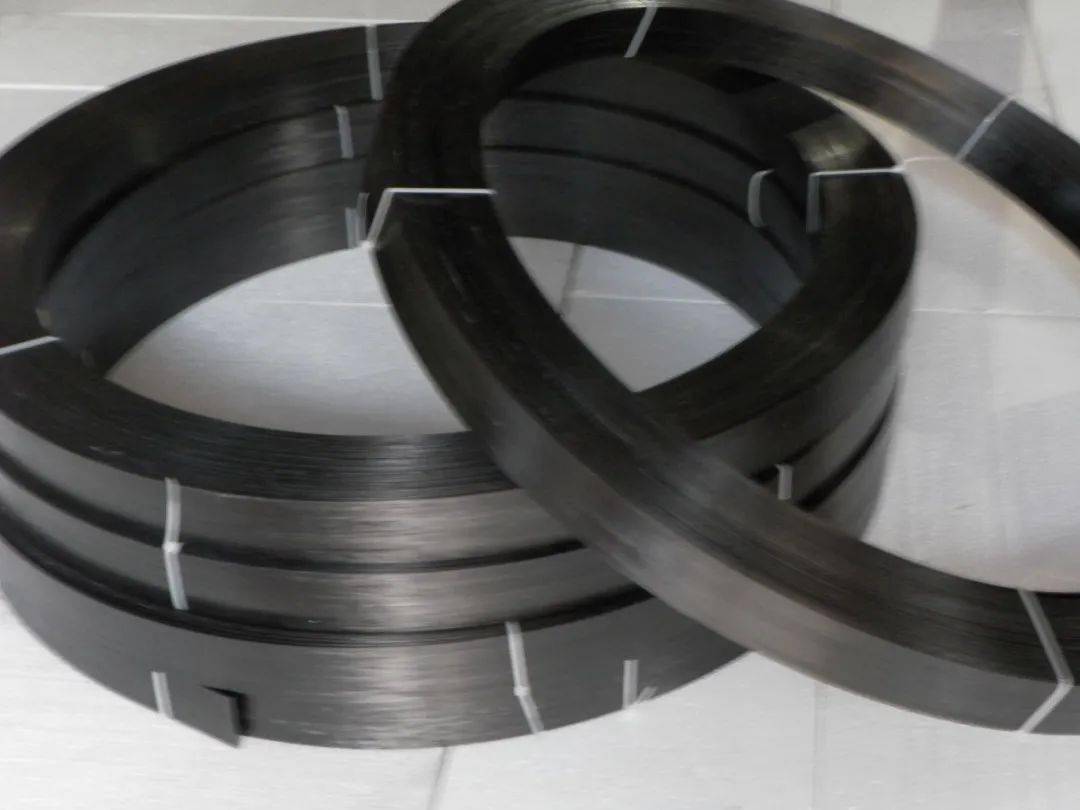
Pultruded carbon fiber profiles are the quiet workhorses of modern engineering. They do not look dramatic — often just a dark gray rod, angle, or channel with a fine linear grain running its length — but they carry loads in thousands of structures where steel would corrode, aluminium would flex, and wood would rot. This guide explains what pultruded carbon fiber profiles are, where they outperform other materials, and how to specify them correctly.
How This Article Is Organized
What pultrusion is, and why carbon fiber suits it
The main profile shapes and what each is used for
Rods and tubes
Angles, channels, and I-beams
Custom and hybrid profiles
Where pultruded carbon profiles earn their place
Civil infrastructure and bridges
Industrial machinery and frames
Energy and offshore structures
Key properties and how to read them
Specification checklist for buyers
Cost, sustainability, and where the market is heading
1. What Pultrusion Is, and Why Carbon Fiber Suits It
Pultrusion is a continuous manufacturing process. Thousands of fiber strands are pulled from creels, guided through a resin bath, then drawn through a heated die shaped exactly like the final profile. Inside the die the resin cures, and the finished part exits as a straight, constant cross-section that can be cut to any length.
The word comes from "pull" plus "extrusion." Unlike extrusion, where material is pushed, pultrusion pulls the fiber reinforcement continuously, which keeps every fiber aligned along the length of the part. That alignment is the whole point: carbon fiber is strongest when load travels parallel to the fiber, and pultrusion produces exactly that geometry.
1.1 Why carbon fiber, and not just glass fiber
Fiberglass pultrusion is cheaper and dominates many commodity applications. Carbon fiber enters the picture when stiffness and weight really matter. A carbon profile can be three to five times stiffer than an equivalent glass profile at a fraction of the weight of steel. For a bridge girder, a robot arm, or a high-speed machine component, that difference decides whether the design works at all.
1.2 What the finished material looks like
A standard pultruded carbon profile is roughly 60 to 70 percent fiber by volume, bonded with an epoxy or vinyl ester resin. The surface may show the characteristic longitudinal fiber lines, or carry a smooth peel-ply or matte finish. Interior voids, if any, should be minimal; a good supplier will control resin content and cure temperature tightly.
2. The Main Profile Shapes and What Each Is Used For
2.1 Rods and tubes
Solid rods are used as tension members, tie rods, and stiffeners. Hollow tubes handle bending and torsion efficiently and are common in structural frames, linkages, and support columns. Both are available in metric and imperial diameters, and tubes can be supplied in round, square, or rectangular cross-sections.
2.2 Angles, channels, and I-beams
These are the structural shapes engineers know from steel design, translated into composite form. Carbon fiber angles, channels, and I-beams let a designer build a frame, truss, or ladder using familiar geometry while cutting weight dramatically. They are often bolted or bonded together on site, which keeps fabrication simple.
2.3 Custom and hybrid profiles
One advantage of pultrusion is that the die can be made in almost any shape. Custom profiles with integrated flanges, T-slots, or hollow chambers are routine. Hybrid profiles combine carbon fiber with glass fiber, aramid, or a surface veil to balance cost, impact resistance, and appearance — for example, a carbon core with a glass outer layer for electrical insulation.
3. Where Pultruded Carbon Profiles Earn Their Place
3.1 Civil infrastructure and bridges
Retrofit and new-build bridges use carbon pultrusions for deck panels, stay-in-place formwork, cable trays, and reinforcement of concrete beams. The appeal is threefold: the material does not rust, it can be installed in thin sections that add little dead load, and it tolerates the freeze-thaw cycles that punish steel in coastal or northern climates.
Light pedestrian bridges have been built almost entirely from pultruded carbon and glass profiles, assembled on site from standard sections. They can be lifted into place by a small crane, which is a major advantage on sites with restricted access.
3.2 Industrial machinery and frames
High-speed machinery rewards stiffness and low moving mass. Robot gantries, pick-and-place frames, and automated handling equipment built from carbon pultrusions accelerate faster and vibrate less than steel equivalents. The same applies to inspection equipment that must stay dimensionally stable over temperature swings.
3.3 Energy and offshore structures
Wind turbine internals, solar mounting rails, and offshore platform components all benefit from a material that shrugs off salt spray. Where a steel rail would need galvanising and periodic replacement, a pultruded carbon or hybrid profile can stay in service for decades with almost no upkeep.
3.4 A note on electrical and thermal behaviour
Carbon fiber conducts electricity and heat. In some applications that is useful; in others it is a problem. Designers working near live circuits often choose glass- or aramid-surfaced hybrids, or add an insulating veil layer, to keep the part safe.
4. Key Properties and How to Read Them
When a supplier quotes pultruded carbon profiles, a few numbers matter more than the rest.
4.1 Tensile strength and modulus
Tensile strength describes how much load the profile carries before failing; tensile modulus describes how much it resists stretching under that load. Standard modulus carbon fiber grades deliver roughly 120 to 160 GPa modulus in a good pultrusion, while intermediate and high modulus grades push higher at greater cost.
4.2 Flexural and compressive behaviour
Because pultrusions are unidirectional, they are much stronger in tension than in compression, and weak in the direction across the fibers. Where a part will be bent or squeezed, the supplier should recommend a layup with some off-axis fiber or a woven surface layer.
4.3 Density and specific stiffness
Carbon composite density sits around 1.5 to 1.6 g/cm³, against 7.8 for steel and 2.7 for aluminium. Specific stiffness — stiffness divided by density — is where carbon pultrusions win decisively, and it is the number to quote when justifying a weight-driven design.
4.4 Environmental and service limits
Ask about the continuous service temperature, UV resistance of the resin system, and water absorption. Epoxy pultrusions generally perform better in demanding environments than polyester ones, but the choice depends on the application and budget.
5. Specification Checklist for Buyers
Cross-section: exact dimensions, wall thickness, and tolerance band.
Length: standard stock lengths and whether custom cutting is available.
Fiber and resin: standard modulus or high modulus carbon, and the resin family.
Surface finish: matte, glossy, peel-ply, or painted, and whether UV protection is needed.
Mechanical data: tensile, flexural, and compressive values, with the test standard cited.
Machining: whether the supplier can drill, bond, or assembly kits the parts before shipping.
Quality control: incoming fiber checks, cure monitoring, and any batch traceability.
Documentation: certificates, data sheets, and, where relevant, fire or electrical test reports.
6. Cost, Sustainability, and Where the Market Is Heading
Pultruded carbon profiles cost more per kilogram than steel, sometimes several times more. The correct comparison is cost per finished part and cost over service life. A part that never corrodes, needs no painting, and can be handled by one person instead of three often pays for itself quickly.
On sustainability, the picture is improving. Longer service life and lower maintenance reduce total material consumption, and recycling routes for thermoset composites — including pyrolysis and cement-kiln co-processing — are moving from pilot to commercial scale. Designers can also specify bio-based or recycled-content resins where the application allows.
The market direction is clear: more pre-engineered standard profiles, more hybrid layups, and more suppliers offering cut-to-length and assembled kits rather than raw stock. That trend makes carbon pultrusion accessible to smaller engineering teams that could never have justified a custom tooling investment a decade ago.
Final Thoughts
Pultruded carbon fiber profiles are not a replacement for every steel section on earth. They are the right answer when weight, stiffness, corrosion resistance, or dimensional stability is the deciding constraint. Understood on their own terms — unidirectional, anisotropic, and best loaded along the fiber — they let engineers design lighter, longer-lasting structures that would be impractical in metal.
Tanchain supplies carbon fiber profiles, tubes, and a complete range of advanced fiber materials including carbon fiber tows, fabrics, prepreg, and custom composite parts. To discuss a pultruded profile specification or request a quote, browse our carbon fiber series or contact our team directly.