


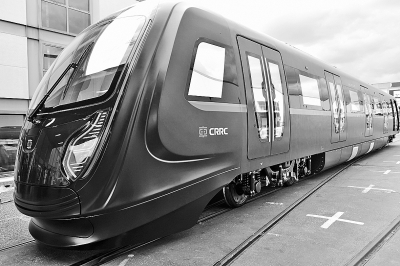
Rail rolling stock is one of the most demanding structural environments in modern transport. A train is a long, slender beam that must carry passengers and freight for thirty years or more, absorb millions of load cycles, survive brake heat, weather, tunnel grit and wash-line corrosion, and still come in under an axle load that the track, bridges and tunnels will accept. Increasingly, operators also want lower traction energy and less track damage. Carbon fiber composites address all four pressures at once, which is why rail rolling stock has become one of the fastest-growing application areas for carbon fiber reinforcement alongside aerospace, wind power generation and shipbuilding.
This article maps how carbon fiber composites are actually used across rail vehicles, from high-speed passenger trains and metro cars to trams, regional diesel multiple units and specialist freight wagons. It looks at which parts benefit, which material forms are chosen for each part, how those parts are manufactured and certified, and what buyers should check before placing an order. It is written for rolling stock builders, fleet engineers, interior contractors and procurement teams who need a practical view rather than a laboratory one.
Part One: Why Rail Rolling Stock Is Turning to Carbon Fiber
Steel and aluminium remain the backbone of train construction, and they will stay there. Carbon fiber is not replacing them wholesale. Instead composites are used where the weight, inertia, corrosion or fatigue penalty of metal costs more than the material itself. Four pressures drive that decision in the rolling stock sector.
1.1 Axle Load and Track Access Charges
Every kilogram removed from a vehicle body reduces static axle load and dynamic wheel-rail forces. Lower unsprung and sprung mass means less track wear, and on many networks track access charges are directly linked to vehicle mass and track-friendly running. A lighter train also accelerates faster with the same traction package, which shortens journey times on stop-start metro and suburban routes without adding power.
1.2 Traction Energy and Carbon Reporting
Energy consumption rises with mass. On a metro duty cycle with frequent braking and acceleration, mass reduction of a few percent in the car body shell translates into measurable traction energy savings over a fleet's life. With rail operators under pressure to publish carbon intensity per passenger kilometre, lightweight composite structures have become part of the sustainability case, not only an engineering preference.
1.3 Corrosion, Fatigue and Service Life
Steel suffers where moisture, salt and cleaning chemicals collect. Carbon fiber composites do not corrode, and their fatigue behaviour under repeated loading is fundamentally different from metal: instead of a fatigue limit that eventually cracks, well-designed laminates tolerate very high cycle counts with minimal stiffness loss. That matters for door leaves, roof equipment supports and any part exposed to vibration for decades.
1.4 Fire, Smoke and Interior Performance
Rail interiors are governed by some of the strictest fire performance rules in transport. Composite panels, with the right resin system and the right additives, can meet the flame spread, heat release and smoke density requirements while still saving weight, which is why composite interior panels and fire barriers appear on the same specification sheet.
Part Two: Where Carbon Fiber Composites Are Used on a Train
The applications below follow the vehicle from the outside in. Each entry notes what the part does, why composites fit, and the material form normally specified.
2.1 Car Body Shell and Structural Modules
For high-speed and metro applications, composite car body modules and roof structures reduce the mass that has to be accelerated and braked at every station. Sandwich structures with carbon fiber skins and lightweight cores deliver high bending stiffness at low weight, while large single-piece modules reduce the number of joints, fasteners and sealant lines that drive assembly cost and corrosion risk.
2.2 Interior Panels, Ceilings and Partition Walls
Interior panels are one of the highest-volume composite use areas in a train. Side walls, ceiling panels, luggage rack fascia, vestibule partitions and door surrounds are typically produced as sandwich panels with composite skins. Weight savings here improve the vehicle's centre of gravity and reduce the loads transferred to the car body, and the panel surface can be finished to the operator's livery without additional cladding.
2.3 Door Leaves and Door Mechanisms
Plug and sliding door leaves operate hundreds of times a day, thousands of times a month. Mass reduction in the leaf reduces the load on the actuator, rollers and hangers, which extends maintenance intervals. Carbon fiber reinforced door leaves resist denting and do not corrode along the lower edge, a common failure point on metal leaves exposed to platform washing and standing water.
2.4 Bogie, Underframe and Unsprung Components
This is the most technically sensitive area and the one where weight matters most, because unsprung mass directly affects track damage and ride quality. Traction rods, brake caliper carriers, suspension arms and axle-mounted parts have been developed in carbon fiber composites for research trains, trams and special-purpose vehicles. Where full composite substitution is not yet approved, hybrid designs that reinforce a metal part with a composite overwrap offer a step change at lower certification cost.
2.5 Roof Equipment Supports and Pantograph Frames
Air conditioning units, roof ducts, antenna masts and pantograph structures sit high on the vehicle, so mass removed there lowers the centre of gravity and reduces roll. Pultruded carbon fiber profiles and tubes give stiff, corrosion-free framing that can be assembled into supports and masts which hold their geometry for the life of the vehicle.
2.6 Interior Furnishing and Passenger Comfort Parts
Seat frames, folding tables, handrail supports, and bicycle and luggage racks benefit from composite construction. Reduced mass in these parts reduces the loads acting on the floor structure and the fixings, and composite surfaces are comfortable to touch, unlike bare metal parts which feel cold in winter and hot in summer.
2.7 Fire Barriers and Thermal Insulation Zones
Composite fire barriers combine structural function with fire performance in equipment cabinets, under-floor voids, battery compartments and gangway areas. Pre-oxidized fiber fabrics and felts and aramid fabrics are widely specified where the requirement is thermal insulation and flame resistance rather than stiffness, and they are frequently used in combination with carbon fiber panels to give a single assembly that is both stiff and fire safe.
2.8 Freight Wagons and Specialist Rolling Stock
In freight, the driver is payload rather than passenger comfort. Composite wagon bodies, container frames, hatch covers and liners reduce tare mass and therefore allow more cargo per axle. Composite liners resist aggressive bulk cargoes such as salt, fertiliser and mineral concentrate which attack steel floors, while composite hatch covers eliminate the corrosion and sealing problems of metal equivalents.
Part Three: Material Forms and Where Each One Fits
Composite parts are not a single product. Rolling stock projects use several distinct material forms, and specifying the right one at the start avoids most of the cost surprises later in the programme.
3.1 Carbon Fiber Tow and Filament Winding
Continuous tow wound into tubes and cylinders is used for pantograph tubes, suspension link bodies, drive shafts and pressure or structural tubes. Filament winding gives high fiber volume fraction, controllable fiber angles and excellent hoop strength, all reasons it dominates tubular carbon fiber parts in rail and other transport sectors.
3.2 Carbon Fiber Fabrics and NCF
Woven fabrics and non-crimp fabrics are the standard reinforcement for large panels, sandwich skins and hand-laid or infused parts. NCF is preferred where the laminate must be laid up quickly with a defined fiber architecture, while woven fabric gives better drape over complex geometry. Unidirectional fabric is used where stiffness in one direction governs, such as reinforcement strips and structural splices.
3.3 Carbon Fiber Prepreg
Prepreg provides the most consistent fiber content and the strongest performance-to-weight ratio, and it is the normal choice for visible interior panels, high-quality exterior panels and structural parts where repeatability is critical. Cure cycles can be matched to the shop's autoclave or press capability, and out-of-autoclave grades are now widely used on rolling stock to keep tooling and energy costs down.
3.4 Pultruded Profiles, Tubes and Plates
Pultrusion produces constant-section parts such as roof framing, cable trays, structural stiffeners and support profiles at a cost per kilogram that is far lower than hand-laid composite. Carbon fiber plates are used for strengthening existing metal structures and for stiff, thin components such as door hangers and bracketry. These formats are the most practical entry point for rolling stock engineers who are new to composites.
3.5 Short Fiber Compounds
Chopped and milled carbon fiber compounds are injection-moulded or compression-moulded into small, complex, high-volume parts such as clips, brackets, spacers and housings. They provide stiffness, dimensional stability and low thermal expansion at a cost that is comparable to engineering plastics, and they often replace metal in non-structural interior parts.
3.6 Aramid and Pre-Oxidized Fiber Complements
Aramid fabrics add impact resistance and cut through resistance, and they are frequently used as the inner layer of a carbon fiber sandwich to stop brittle failure during impact. Pre-oxidized fiber yarns, fabrics and felts add flame resistance and thermal insulation. A rolling stock project typically uses all three fiber families, each in the zone where its property matters most.
Part Four: How Composite Rolling Stock Parts Are Made and Qualified
Composites only deliver their theoretical advantage when the process and the documentation are right. Rail projects involve notified bodies, national safety authorities and long warranty periods, so process discipline is not optional.
4.1 Manufacturing Routes
Typical routes include autoclave or press curing of prepreg for structural and visible panels, resin infusion and hand lamination for large or low-volume parts, filament winding for tubes and vessels, pultrusion for constant profiles, and compression or injection moulding for small moulded parts. The route is chosen by part size, quantity, surface requirement and the certification evidence already available.
4.2 Joining and Assembly
Composite parts are usually bonded or mechanically fastened to metal structures. Bonded joints distribute load more evenly and avoid drilling fibers, but they require surface preparation, controlled bond-line thickness and inspection. Mechanical fastening removes the adhesive process risk but introduces hole stress concentrations and possible galvanic effects at metal interfaces, which are managed by isolating layers, insulating sleeves and correct fastener selection.
4.3 Fire, Smoke and Toxicity Compliance
Materials must demonstrate compliance with the fire performance standards applying to the vehicle and its operating network. Phenolic and other fire-retardant resin systems, combined with mineral or intumescent additives and suitable core materials, are normally required for interior applications. Test evidence must be traceable to the exact material and thickness used in production, so changing a resin or core supplier is a certification event, not a purchasing decision.
4.4 Inspection, Traceability and Repair
Purchasers should expect documented fiber and resin batch traceability, laminate records, non-destructive inspection of critical bonds and voids, and a defined repair procedure for in-service damage. Composites can usually be repaired in a maintenance depot with local scarfing and bonded patches, which is a significant advantage over metal parts that must be cut out and welded.
4.5 Testing and Approval
Structural parts are qualified by static load tests, fatigue cycling, impact and crash-relevant testing, and fire testing as applicable. For safety-critical parts such as bogie components, approval paths are long and evidence-heavy, which is why many fleets begin with interior panels, door leaves and roof equipment supports. These parts deliver rapid weight and corrosion benefits with far shorter approval cycles.
Part Five: Commercial Case and Procurement Checklist
Composite parts usually cost more per kilogram than the steel or aluminium part they replace. The business case rests on total cost of ownership rather than purchase price: reduced traction energy, lower track access charges, longer maintenance intervals, no corrosion repairs, and fewer parts and fastenings in each assembly.
Before issuing an enquiry for carbon fiber rail components, clarify the following points.
Application and duty cycle - the part, its load case, expected service life and the operating environment including tunnel, coastal or wash-line exposure.
Mass target and interface - the current metal part mass, the target mass, and the geometry that must be preserved for existing mating parts.
Material form and process - whether the part will be laid up, infused, wound, pultruded or moulded, and who owns the tooling.
Fire and smoke requirement - the exact standard and test evidence required for the vehicle type and network.
Certification path - which documents are needed, who signs them, and whether first-article inspection or design approval is required.
Traceability and documentation - batch records, laminate schedules, inspection reports and repair instructions.
Lead time and spares - prototype and series lead times, minimum order quantities, and how replacement parts will be supplied over the fleet life.
Repair strategy - who repairs the part, with what materials, and whether depot staff need training.
Part Six: Trends Shaping the Next Generation of Rail Vehicles
Three developments are accelerating composite use in rolling stock. First, high-speed and intercity programmes continue to push for lighter trains because every kilogram saves energy over decades of service. Second, metro and tram operators are renovating existing fleets rather than buying new, and interior and door composites are the fastest way to cut weight and maintenance on a mid-life train. Third, hydrogen and battery traction add new mass in the form of tanks and battery packs, and engineers offset that mass with composite structures and enclosures so the vehicle stays within axle limits.
Alongside these, the supply chain is maturing. Pultruded profiles, standard plates and off-the-shelf tubes are now available in rail-relevant grades, which lowers the engineering barrier for parts that do not need a bespoke laminate. Recycled and bio-based resin systems and improved end-of-life routes for thermoset composites are also moving from research to pilot projects, driven by operator sustainability reporting.
Part Seven: Choosing a Carbon Fiber Partner for Rolling Stock Projects
Rail composites demand more from a supplier than a good data sheet. They require consistent fiber and resin quality, controlled processes, documentation that satisfies an assessor, and the ability to move from prototype to series without changing the material.
As a supplier of carbon fiber raw yarn, carbon fiber filament, chopped carbon fiber, carbon fiber fabrics, carbon fiber prepreg, carbon fiber plates, carbon fiber tubes and finished carbon fiber parts, together with aramid filament, aramid staple fiber, aramid fabrics, pre-oxidized fiber tow, filament, staple fiber, yarn, fabric and felt, our team supports rolling stock builders and interior contractors from material selection through to qualified part supply. If you are working on a lightweight car body module, an interior panel package, a composite door leaf, roof equipment supports or freight wagon components, we can help you choose the right material form and the right process route for your programme.
Contact our engineering team to discuss your rolling stock application, request material samples, or receive a quotation for carbon fiber composites in rail vehicles. Lightweight, corrosion-free and fatigue-tolerant structures are no longer a niche experiment on the railway; they are the practical answer to axle load, energy and service life targets that conventional metals alone can no longer meet.