


-
Carbon Fiber in Desalination and Water Treatment: Fighting Salt, Pressure, and Time
-
Carbon fiber composites are replacing steel in seawater reverse osmosis pressure vessels, brine handling, high-pressure pipework, and water treatment equipment, cutting corrosion, weight, and maintenance cost across the plant's life.
Carbon Fiber in Desalination and Water Treatment: Fighting Salt, Pressure, and Time
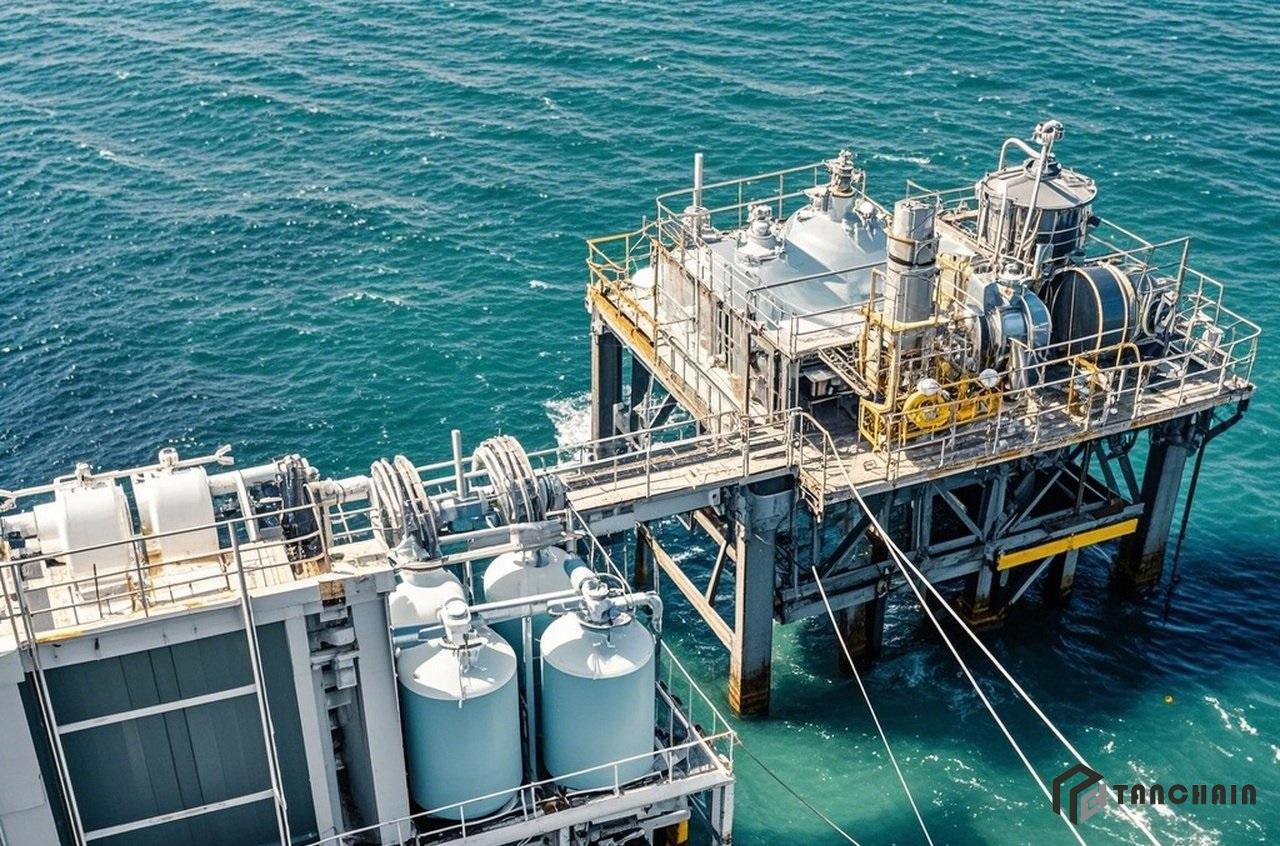
Water treatment plants are, in practice, corrosion laboratories. Seawater, brine, hypochlorite dosing, and warm humid coastal air attack metal from every direction at once, and the equipment that suffers most is the equipment that has to hold high pressure. Carbon fiber composites have moved into this space quietly but steadily, and for plant operators the reasons are practical rather than fashionable.
This article walks through where carbon fiber is used in desalination and water treatment, why composite material wins in these environments, and what a buyer should check before specifying it. The focus is on seawater reverse osmosis and the wider treatment plant, since that is where the engineering demands are most severe.
Here is the layout of the discussion:
Part One — Why Metal Struggles in a Water Plant
The corrosion environment in detail
Pressure as a design driver
The weight and installation penalty
Part Two — Where Carbon Fiber Fits
RO membrane pressure vessels
High-pressure pipework and manifolds
Tanks, vessels, and brine handling
Pretreatment filters and media tanks
Pumps, shafts, and rotating parts
Structural repair and refurbishment
Part Three — The Material Side
Tow, tape, and fabric forms
Hybrid and supporting fibers
Part Four — Manufacturing and Quality
Winding and the pressure-vessel route
What a buyer should verify
Part Five — The Commercial Case
Part One — Why Metal Struggles in a Water Plant
Understanding the corrosion problem explains almost every material decision in a desalination facility.
The Corrosion Environment in Detail
A seawater reverse osmosis plant handles several aggressive streams at once. Raw seawater brings chlorides and biological activity. Pretreatment adds coagulants and sometimes chlorine. The high-pressure section carries concentrated brine at elevated temperature. Each stream attacks metal differently, and no single alloy handles all of them economically.
Stainless steel grades that survive seawater are expensive and still vulnerable to pitting and crevice corrosion. Carbon steel needs coating, cathodic protection, and constant inspection. In practice, plants spend heavily on material selection and then spend again on maintenance.
Fiber-reinforced polymer equipment changes the equation because the load-bearing structure is not metal. A properly engineered composite pressure vessel does not rust, does not pit, and is not affected by chloride attack. For coastal plants, that single property reshapes the maintenance budget.
Pressure as a Design Driver
Seawater reverse osmosis runs at pressures that surprise people outside the industry. Depending on salinity and membrane configuration, the high-pressure section typically operates somewhere between roughly 800 and 1,200 psi, and some brine and ultra-high-pressure stages go higher.
That pressure is what makes membrane housings a serious structural product rather than a simple tube. The vessel must contain cyclic pressure for years without leaking, cracking, or delaminating. This is exactly the kind of load case where carbon fiber reinforced polymer performs well, because the fiber carries the hoop stress and the resin protects and bonds the structure.
Why cyclic pressure matters
Desalination vessels rarely sit at constant pressure. Start-up, shutdown, cleaning cycles, and varying demand create thousands of pressure cycles over a plant's life. Composite housings are designed and tested for this fatigue behavior, which is one reason they have become the default choice for membrane pressure vessels worldwide.
The Weight and Installation Penalty
Weight is the quiet advantage. A carbon or glass reinforced housing weighs a fraction of its steel equivalent for the same pressure rating. In a plant with hundreds of vessels arranged on racks and skids, that difference affects the entire structural design.
Lighter vessels mean lighter support frames, smaller cranes during installation, easier handling in tight skids, and less load on building floors. For offshore and shipboard desalination, where every kilogram costs fuel and stability, this becomes a primary selection criterion rather than a bonus.
Part Two — Where Carbon Fiber Fits
The application list in a modern water plant is longer than most buyers expect.
RO Membrane Pressure Vessels
This is the flagship application. Membrane housings wound from fiber-reinforced polymer are now standard in seawater and brackish water reverse osmosis. The winding process places continuous fiber at the exact angles needed to resist hoop and axial stress, and the resulting vessel is corrosion-proof inside and out.
Modern housings are engineered for long service life, high cycle counts, and compatibility with the full range of cleaning chemicals. End closures, seals, and port interfaces receive the same attention as the barrel, because most field failures occur at connections rather than in the body of the vessel.
High-Pressure Pipework and Manifolds
The pipe that connects the high-pressure pump to the vessel racks and carries brine away faces the same corrosion and pressure demands. Filament-wound composite pipe, and increasingly carbon fiber reinforced pipe, handles this duty without the wall-thickness allowances that steel requires for corrosion.
Because composite pipe resists both internal corrosion and external coastal atmosphere, it holds up in the difficult areas of the plant: pump discharge, interstage manifolds, and brine discharge lines where chlorides and velocity combine.
Tanks, Vessels, and Brine Handling
Brine is the most aggressive stream in the plant, and it is also the one most often stored and transported. Wound composite tanks for brine and saltwater storage resist chloride attack completely and can be fabricated on site or delivered in sections, which matters when access routes are limited.
Degassing vessels, chemical dosing tanks, and intermediate storage all benefit from the same logic. Where the fluid is salty, warm, or chemically treated, composites remove the corrosion variable from the design.
Pretreatment Filters and Media Tanks
Sand, carbon, and multimedia filters form a large part of any treatment train, and their pressure tanks take a beating from backwash cycles and chloride exposure. Composite filter vessels for these duties are lighter than steel, immune to rust, and easier to replace when a plant is upgraded.
Pumps, Shafts, and Rotating Parts
Carbon fiber composites are also used for pump components, drive shafts, and rotating elements where reduced inertia and corrosion resistance improve efficiency. Lower rotating mass means faster response and less wear on bearings, a real benefit in continuous-duty water plants.
Structural Repair and Refurbishment
Not every improvement requires replacement. Carbon fiber fabric and wrap systems are used to repair and strengthen deteriorated concrete, pipe, and vessel structures in water facilities. The repair adds strength without adding much weight and without the corrosion that a welded steel patch would introduce.
For aging plants, this is often the most cost-effective way to extend service life before a full rebuild becomes unavoidable.
Part Three — The Material Side
Behind every composite vessel is a set of fiber and resin choices that determine performance.
Tow, Tape, and Fabric Forms
Continuous carbon fiber tow and prepreg tape are the workhorses of filament winding and automated layup, where consistent tension and fiber volume make the difference between a reliable pressure vessel and an unpredictable one. Carbon fiber fabric serves repair work, hand layup, and localized reinforcement where drape and conformability matter more than automation.
Aramid fiber is often specified alongside carbon to improve impact resistance and damage tolerance, since aramid absorbs energy that brittle carbon alone would not. Glass fiber remains common in lower-pressure water duties where cost matters more than minimum weight.
Hybrid and Supporting Fibers
Oxidized fiber and pre-oxidized fiber products contribute non-flammability and thermal insulation to water plant equipment. Where a vessel or enclosure must resist fire or limit heat transfer, these fibers complement the structural carbon layers.
The practical point for a buyer is that a single plant may need several fiber types, and sourcing them from one supplier simplifies qualification and consistency.
Part Four — Manufacturing and Quality
Winding and the Pressure-Vessel Route
Filament winding dominates membrane housing production. Continuous fiber is drawn through resin and wound onto a mandrel at controlled angles, building the wall thickness in layers. Hoop layers resist the internal pressure; helical layers add axial strength and handle bending and handling loads.
The process is well understood, repeatable, and suited to the cylindrical geometry of reverse osmosis vessels. Consistent fiber tension, correct resin content, and controlled cure are the variables that separate good vessels from marginal ones.
Testing that matters
Qualified manufacturers test to burst, cycle to rated pressure thousands of times, and verify performance after chemical exposure. Third-party certification and traceable material records are normal expectations in this market, not premiums.
What a Buyer Should Verify
Rated working pressure and tested burst pressure, with the fatigue cycle count stated
Chemical compatibility with the full cleaning and pretreatment regime
Fiber and resin type, with records that trace to the material lot
Dimensions and interface details that match the plant's membrane and rack design
Certification, warranty terms, and the manufacturer's service history in water applications
Part Five — The Commercial Case
The argument for carbon fiber in desalination and water treatment is not just about rust. It is about total cost across a plant's life.
A composite vessel or pipe line avoids the recurring expenses of coating, inspection, and replacement that metal demands in a marine environment. It reduces structural weight, which lowers installation and support costs. It tolerates the pressure, chemistry, and cycling that define modern seawater reverse osmosis. For operators planning decades of service, those factors combine into a lower cost of ownership.
Water scarcity is not easing, and desalination capacity keeps growing in coastal regions worldwide. As plants get larger and operate longer, material choices that reduce maintenance downtime become a competitive advantage rather than a technical detail.
TANCHAIN supplies carbon fiber and aramid fiber materials used in composites for water treatment and desalination equipment, including continuous tow, prepreg, fabric, and related products. To discuss the right specification for your vessel, pipe, or tank project, visit our product pages or contact our technical team for a quotation.